Tyler Perry’s Attempt to Support TSA Employees Highlights Federal Ethics Limits on Cash Gifts
A high-profile gesture runs into standard government ethics restrictions
Tyler Perry recently sought to provide direct financial help to Transportation Security Administration (TSA) employees, drawing attention to a lesser-known constraint facing many federal workers: rules that restrict what they can accept from members of the public.
Under federal ethics standards that apply across the U.S. government, employees generally may not solicit or accept gifts offered because of their official position. Cash is prohibited as a gift in this context, and certain cash-like instruments are treated similarly. The restrictions are designed to prevent conflicts of interest and the appearance of favoritism, particularly in roles where employees exercise authority over members of the public.
Why cash is treated differently from other items
Federal ethics rules draw a bright line around cash. While there are limited exceptions that may allow acceptance of some low-value, non-cash items under specific conditions, cash is not among those permitted categories. The framework also treats some prepaid or widely spendable cards as cash equivalents, depending on how they function.
Separate from the cash prohibition, additional limits can apply to non-cash items: the rules commonly referenced across federal agencies include a per-item value threshold and an annual aggregate limit from the same source. These guardrails are intended to reduce the risk that gifts influence—or appear to influence—official conduct.
Checkpoint context: avoiding disruption and perceived preferential treatment
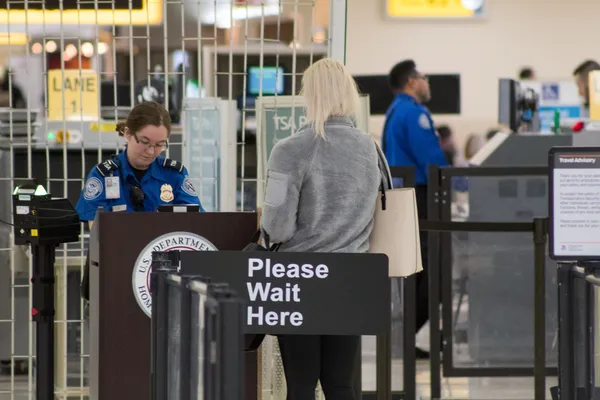
TSA officers work in a setting where impartiality is central to public trust. Even when a gift is intended as gratitude, accepting it at or near a checkpoint can create operational concerns and raise questions about whether travelers are receiving special treatment. For that reason, attempts to give money directly to screening personnel are typically not allowed, and agencies emphasize structured, documented channels for any permissible support.
What forms of assistance can be used instead
When members of the public want to support TSA employees, options generally shift away from one-to-one exchanges and toward approaches that comply with ethics requirements and workplace controls. Depending on local arrangements and approvals, these may include:
- Donations coordinated through employee organizations that can accept and distribute support to members.
- Agency-accepted donations of goods or services where permitted by law and handled through official processes.
- Non-cash items within allowed thresholds, structured to avoid direct exchanges tied to screening decisions.
Federal ethics rules are built around a simple premise: public service must be carried out without personal financial influence from those affected by government decisions.
A broader spotlight on frontline federal workers
The episode underscores how quickly well-intentioned public support can collide with compliance obligations in federal workplaces. It also highlights the complexity of giving in settings where employees interact directly with the public, enforce rules, and make real-time decisions that affect travelers. In practice, the most workable assistance tends to be support routed through structured programs rather than cash handed to individuals.