Trump floats National Guard deployment to Atlanta during White House Black History Month reception speech
Remarks place Atlanta within a broader push for federal and Guard-backed crime initiatives
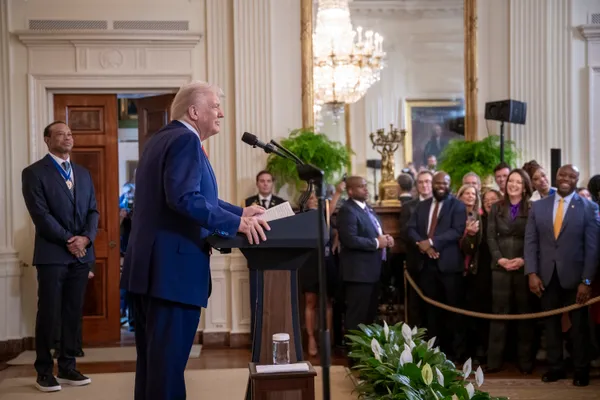
President Donald Trump raised the possibility of sending National Guard forces to Atlanta during a White House Black History Month reception on Wednesday, February 18, 2026, describing the city as a potential target for a security intervention if local leaders sought federal help.
In the same set of remarks, Trump presented National Guard deployments as a tool his administration is prepared to use for public-safety objectives in major U.S. cities. The comments did not announce a formal deployment order for Atlanta, nor did they include operational details such as troop levels, mission scope, command authority, or any requested role from Georgia state officials or the City of Atlanta.
What was said—and what was not announced
Trump’s Atlanta comments came as part of a speech that blended Black History Month recognition with policy claims and public-safety messaging. The president did not say that Atlanta officials had requested National Guard support, and no federal directive was issued at the event to begin a deployment.
He suggested Atlanta could be addressed “so fast” if officials asked for assistance, framing the idea as an extension of earlier efforts to move “career criminals” out of cities.
Context: expanding use of Guard and federal law enforcement for city policing
Trump’s remarks align with actions taken during his second term that have placed the National Guard and federal law-enforcement resources into prominent roles in urban crime initiatives, including in Washington, D.C. Georgia has previously committed Guard personnel to assist in D.C. operations under orders that extended through late 2025, underscoring how state Guard units can be mobilized in multi-jurisdictional public-safety efforts.
While presidents and governors have long used the National Guard for emergencies and civil disturbances, sustained use for routine urban crime reduction raises recurring legal and operational questions about jurisdiction, the boundaries between military and civilian policing, and the conditions required for federal involvement.
How Guard deployments typically work
National Guard forces usually operate under a governor’s authority for in-state missions, though they can support federal efforts under specific arrangements.
Rules governing use of force, arrest authority, and policing tasks can vary substantially depending on the legal status of the deployment.
Any Atlanta-focused operation would likely require coordination among the City of Atlanta, the State of Georgia, and federal agencies to define mission limits and accountability.
Political and local implications
Trump’s comments place Atlanta into a national political debate over crime, immigration enforcement, and the federal government’s role in local public safety. As of February 19, 2026, no public documentation from the federal government or Georgia officials has established that a Guard deployment to Atlanta is imminent, requested, or authorized.
Any next steps would be expected to clarify whether the proposal is rhetorical or preparatory, and whether state and city leaders intend to engage in formal planning.