Student housing, scholarships, and neighborhood investment signal continued development around Atlanta’s HBCU campuses
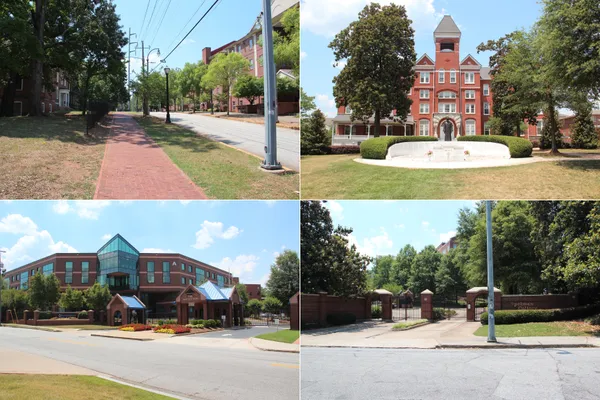
A major new housing plan near the Atlanta University Center
A new student-housing development planned near the Atlanta University Center is the latest sign that investment around Atlanta’s historically Black colleges and universities is likely to remain active in the years ahead.
In late January 2026, Fulton County’s development authority approved a plan to finance an approximately 800-bed student housing facility intended to serve Morehouse College and Spelman College students. The development is planned for 850 West End Ave. SW, near key Atlanta University Center landmarks and directly across from Morehouse’s B.T. Harvey Stadium.
Project scale, financing and timeline
The proposal calls for a roughly 450,000-square-foot building with about 290 residential units. Concept plans include study areas, a fitness center, indoor community spaces, a central greenspace and a rooftop terrace—features consistent with newer purpose-built student housing models that combine residential capacity with common areas designed for campus-adjacent living.
The financing is structured through 501(c)(3) revenue bonds, with a bond issuance authorized up to $144.46 million. The issuance is expected to close in the third quarter of 2026. Development representatives have indicated a construction start targeted for summer 2026, with delivery planned for the fall semester of 2028.
- Location: 850 West End Ave. SW, Atlanta
- Program: ~290 units, ~800 beds
- Size: ~450,000 square feet
- Financing: 501(c)(3) revenue bonds, up to $144.46 million
- Projected delivery: Fall semester 2028
Jobs and local economic implications
Economic development materials tied to the approval estimate the project would support about 350 construction jobs and 14 permanent positions. Beyond the job totals, the project adds a significant residential footprint along West End Avenue, a corridor that has seen rising interest from developers as campus growth, transportation access and neighborhood redevelopment efforts converge.
Enrollment pressure and housing demand
Project representatives told county decision-makers that Morehouse and Spelman have experienced enrollment growth over the last five years, adding to demand for housing near campus. Student housing availability is a recurring constraint for urban colleges, particularly where traditional dorm capacity has not kept pace with enrollment changes and where off-campus options compete with the broader metro rental market.
Scholarship support adds to the broader momentum
Development activity around Atlanta’s HBCUs is also unfolding alongside major philanthropic commitments aimed at improving student outcomes. A 10-year, $50 million initiative announced in late 2025 was structured to provide “gap scholarships” for students near graduation at Clark Atlanta University, Morehouse College, Morris Brown College and Spelman College, with the goal of helping students bridge remaining financial shortfalls after other aid sources are exhausted.
Across the Atlanta University Center, leaders have increasingly framed housing capacity, affordability and completion support as intertwined issues shaping student success and neighborhood change.
Together, large-scale housing investment and targeted scholarship funding underscore how development around Atlanta’s HBCU campuses is being driven by both physical expansion needs and efforts to stabilize students’ paths to graduation—dynamics likely to keep the area a focal point for new projects through the end of the decade.