South Downtown Atlanta redevelopment advances with $140 million first phase focused on restoring landmark buildings
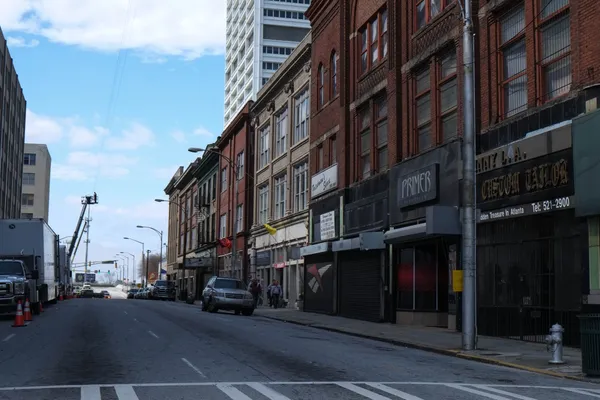
A high-stakes restoration effort in Atlanta’s oldest commercial blocks
A $140 million redevelopment push is taking shape in South Downtown Atlanta, a historic area of Downtown that includes Hotel Row—one of the city’s most intact stretches of early 20th-century commercial buildings along Mitchell Street. The effort centers on rehabilitating aging structures, adding housing and ground-floor activity, and improving the public realm in a district long marked by vacancies and underused properties.
The initiative is moving forward as Atlanta prepares for a major influx of international visitors tied to the 2026 FIFA World Cup, intensifying attention on the city’s core and on projects that can be delivered on a tight timeline.
Ownership shift and a phased development plan
The South Downtown portfolio—spanning roughly 10 city blocks and dozens of historic buildings—changed hands in early 2024 after years of stalled progress under prior ownership. The new owners have framed the strategy around adaptive reuse: preserving building shells and historic streetscapes while retrofitting interiors for modern code, safety, and commercial needs.
Publicly described “Phase 1” plans call for a mix of uses that include new housing units as well as office and retail space, with the earliest work concentrated around Mitchell Street and the Hotel Row area. In parallel, the broader Downtown development environment is evolving: nearby mega-project Centennial Yards is underway, and multiple transportation and streetscape initiatives are in progress across the Downtown/MARTA spine.
What is being built: housing, small business space, and street activation
The first phase of South Downtown redevelopment emphasizes rehabilitation over demolition, a decision that typically raises construction complexity and cost while aiming to retain architectural character. The plan includes residential units intended to increase full-time population and support street-level commerce—an approach commonly associated with downtown recovery strategies in cities where office demand has become less predictable.
- Adaptive reuse of historic structures for mixed-use occupancy
- New housing units to increase the neighborhood’s daily foot traffic
- Retail and food-and-beverage buildouts aimed at activating Mitchell and Broad streets
- Workspace geared toward small businesses and early-stage companies
Early openings and the role of placemaking
Early signs of activation are emerging along Mitchell Street, where new tenants have begun opening or announcing locations. Flexible office space has been launched in restored historic buildings, and additional small-format retail concepts—such as specialty shops and restaurants—have been positioned as near-term tools to draw residents, workers, and visitors back into the corridor.
Downtown revitalization efforts increasingly hinge on converting formerly single-purpose districts into mixed-use areas with residents, walkable retail, and reliable transit access.
Key risks: renovation economics, timing, and continuity
Despite momentum, the economics of restoring older buildings remain challenging. Adaptive reuse often involves structural upgrades, fire/life-safety retrofits, and unpredictable conditions behind walls—factors that can disrupt budgets and schedules. With 2026 deadlines looming, the project’s near-term credibility will largely depend on delivering visible, occupied spaces and coherent streetscape improvements, while sustaining leasing demand beyond event-driven tourism.