Metro Atlanta’s outer-ring housing costs are rising faster, narrowing the long-standing city-suburb affordability gap
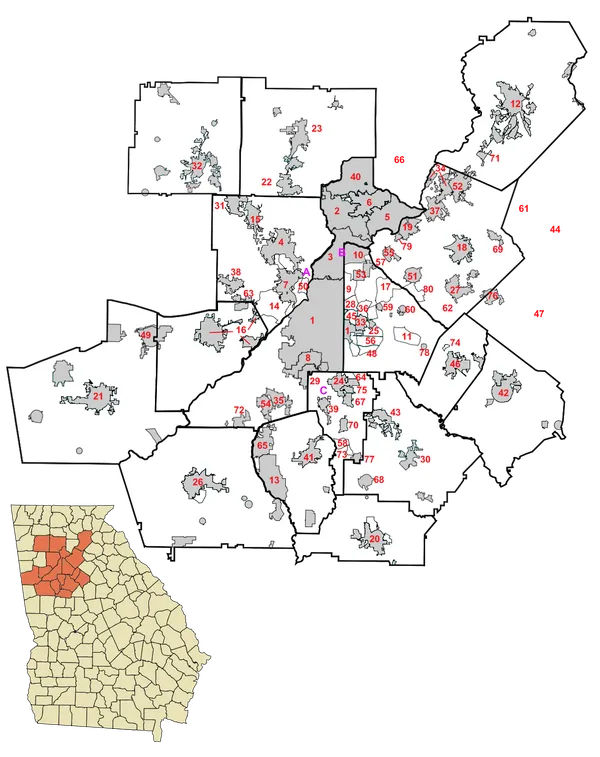
Suburban costs are climbing as the metro’s affordability pressures shift outward
Housing costs in metro Atlanta have been rising unevenly, with several outer and suburban markets posting price levels that increasingly rival — and in some cases exceed — costs inside the city limits. The change reflects a broader “donut effect” in which demand and price growth strengthen farther from the urban core, even as the city’s market shows signs of cooling.
Over the 2019–2024 period, home prices in Atlanta’s suburban and exurban areas rose substantially faster than in the dense urban core, while incomes did not keep pace in those outer areas. The same analysis found that affordability declined most sharply outside the city center, with the steepest deterioration concentrated in suburbs and exurbs rather than in the core.
Rents show a wide spread across jurisdictions — and some suburbs now top the list
Rental data underscore how expensive living outside Atlanta can be. In the latest metro-area rent comparisons released in January 2026, Alpharetta ranked as the region’s most expensive city for one-bedroom apartments at about $1,600 per month. Atlanta ranked second, followed by Sandy Springs at roughly $1,400. At the lower end of the metro spectrum, LaGrange averaged about $850 for a one-bedroom, with Rome and Forest Park also among the most affordable.
The spread illustrates that “suburban” is no longer synonymous with lower rent, particularly in job-rich, amenity-heavy, and school-focused corridors north of the city.
For buyers, pricing has moderated — but the long-run increase remains large
While affordability has worsened over the past several years, recent transaction trends indicate that buyers are gaining some negotiating leverage. In 2025, nearly 69% of metro Atlanta homes sold below the original list price, with an average discount of 7.3%. The reported median original list price was $409,900, implying a typical discount on the order of tens of thousands of dollars depending on the final deal.
Even with more frequent discounts, the longer-term run-up remains significant. By one measure for the core metro area, home prices were reported as nearly 56% higher than six years earlier, a scale of increase that continues to shape household budgets even when year-over-year growth slows.
Why the outskirts can be pricier: demand patterns and constraints
Several forces are converging to push costs outward:
- Stronger price growth in suburban and exurban areas relative to the city during the post-2019 period.
- Income growth that has not matched housing cost increases in many outer areas, intensifying affordability pressure.
- A metro-wide shortage of lower-cost options, with large losses of affordable units reported across the region in recent years.
In metro Atlanta, affordability declines have been measured as deeper in suburbs and exurbs than in the city center over the post-2019 period.
The net effect is a reshaped affordability map: households seeking value by moving outward may face higher-than-expected rents or purchase prices, while still contending with the broader costs of commuting and everyday living across a growing region.