Hartsfield-Jackson travelers face long lines as approaching storms disrupt schedules and strain airport operations
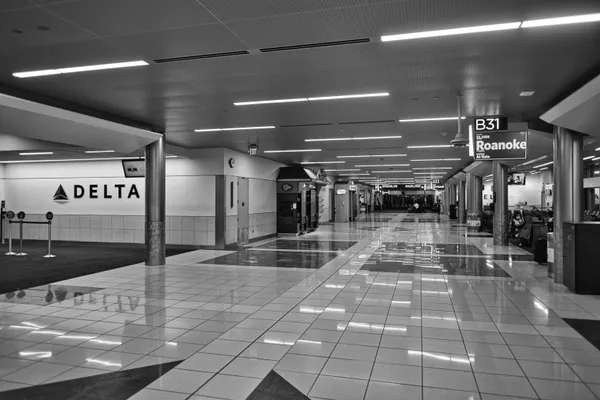
Weather-driven disruptions push crowds into checkpoints and service counters
Passengers moving through Hartsfield-Jackson Atlanta International Airport have faced periods of heavy congestion as deteriorating weather conditions disrupted flight schedules and increased demand at security checkpoints, airline counters and customer-service desks. The airport’s role as a major connecting hub means that even brief interruptions on the airfield can quickly translate into crowding inside terminals, especially when delays affect multiple arrival and departure banks at once.
Federal air-traffic management measures, including arrival slowdowns and ground programs used during thunderstorms and low-visibility conditions, can reduce the number of aircraft that can safely land or depart in a given hour. When flight sequences compress, aircraft may wait longer for gates, which can delay deplaning and create downstream impacts for connecting passengers across concourses.
Gate availability and aircraft flow can become the bottleneck
During storm impacts, congestion is not limited to security screening. Gate constraints can emerge when inbound aircraft arrive in clusters after weather clears, while outbound flights remain delayed, leaving gates occupied longer than planned. This can produce extended waits for arriving passengers to reach a gate, as well as missed connections for travelers scheduled to transfer between flights in tight connection windows.
Operational pressure is amplified at Atlanta because many itineraries rely on connections. When multiple flights are delayed simultaneously, rebooking lines and app-based assistance channels can become saturated, adding to visible crowding around airline customer-service areas.
Staffing levels and peak-time patterns shape the passenger experience
Security wait times at ATL can vary significantly by time of day, with the busiest throughput typically occurring in early-morning departure windows. Weather-driven disruptions can shift those peaks, concentrating passenger surges into shorter periods when flights resume, and increasing pressure on screening lanes and baggage drop queues. When staffing levels are constrained, those surges can take longer to absorb, extending the time travelers spend in lines even after conditions begin to improve.
What travelers can expect as storms move through the region
Severe weather systems moving across the eastern United States have increased the likelihood of flight interruptions that can extend beyond the local area. Because Atlanta is tightly connected to national air traffic flows, disruptions in upstream cities can delay incoming aircraft and crews, affecting schedules even when conditions at ATL are temporarily calm.
Delays can cluster around thunderstorm timing, especially when lightning and wind affect ramp operations.
Arrivals may be spaced out by air-traffic restrictions, increasing gate-availability pressure.
Customer-service demand rises quickly when multiple flights are delayed or canceled at once.
When flight schedules compress after a weather interruption, the airport often experiences a rapid surge in screening and rebooking demand, even if conditions improve outside.
Airport and airline operations typically stabilize once weather clears and aircraft positioning is restored, but the recovery period can take longer than the storm itself. Travelers are advised to monitor airline notifications closely, confirm gate information frequently, and anticipate longer-than-usual processing times during periods of active weather and recovery operations.