Glydways begins construction of autonomous transit pilot linking ATL SkyTrain and Gateway Center Arena in 2026
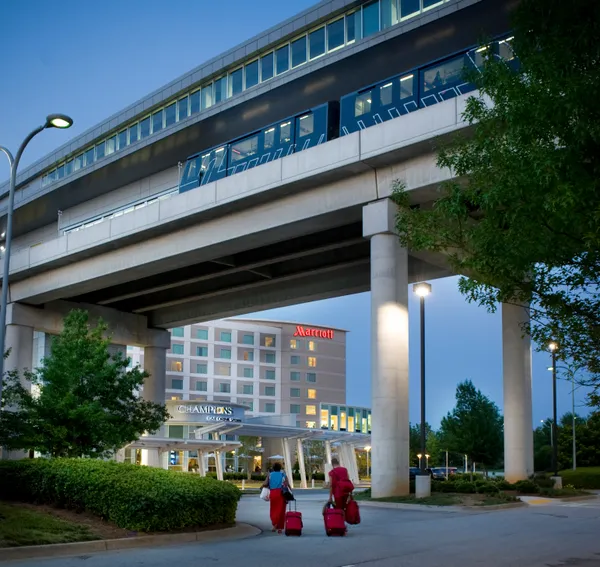
A new test corridor aims to address first- and last-mile gaps near Hartsfield-Jackson
Construction is underway on a short autonomous transit corridor in South Metro Atlanta designed to connect the ATL SkyTrain at the Georgia International Convention Center with the Gateway Center Arena. The project—framed as an Automated Transit Network (ATN) demonstration—uses a dedicated guideway rather than mixing with general traffic, a design intended to standardize operations and simplify safety oversight.
The initial segment is approximately a half-mile in length and is being developed with Glydways’ autonomous electric vehicles. Project sponsors have said the corridor is intended as a public demonstration of on-demand transit service and as a test of whether the model can be expanded to other parts of the region.
Timeline and operating plan
Project materials indicate construction begins in February 2026, with guideway installation followed by vehicle testing and system commissioning. Target timing for passenger service is December 2026.
Operating details published by project partners describe an initial fleet of five autonomous vehicles on a roughly 0.49-mile guideway. The stated plan anticipates four days of operation per week for up to eight hours per day, with an average end-to-end trip time of about 2.5 minutes and a designed throughput of more than 400 rides per hour. The demonstration is expected to run for 24 months starting at the end of 2026, providing a defined evaluation window for performance, rider experience, and maintenance requirements.
Why this corridor was selected
Planning documents tied to the airport-area mobility district cite two long-standing issues in the South Metro area: inadequate first- and last-mile connections and the presence of unserved or underserved populations. A 2019 feasibility effort focused on the airport district recommended testing multiple approaches—including microtransit, autonomous shuttles, and an ATN—before considering larger-scale deployment.
The chosen corridor links major trip generators—an airport-adjacent people-mover station and an events venue—where demand can vary sharply by time of day and during event peaks. A dedicated right-of-way also reduces conflicts with traffic, a factor that often complicates autonomous deployments on public streets.
Governance, partners, and what happens next
Regional coordination for mobility improvements in the area has included MARTA and local governments in Fulton and Clayton counties, alongside airport-area community improvement districts. Project records show a governance structure was established through a multi-party memorandum of agreement, followed by a competitive procurement process that selected a development consortium led by Glydways.
Beyond the initial corridor, a feasibility study led by MARTA is expected to examine pilot results and assess potential future deployment opportunities across the broader Atlanta region. Any expansion would depend on measured outcomes such as reliability, ridership patterns, operating cost, and how well the system integrates with existing transit options.
- Initial route: Georgia International Convention Center SkyTrain station to Gateway Center Arena
- Infrastructure: dedicated guideway
- Target passenger start: December 2026
- Evaluation: multi-month demonstration period with performance and scalability review
The project is structured as a real-world trial intended to validate operations, rider adoption, and whether the model can scale beyond a single short corridor.