Atlanta’s Egleston Hall and UGA’s Legion Pool are named among Georgia’s 2026 endangered landmarks
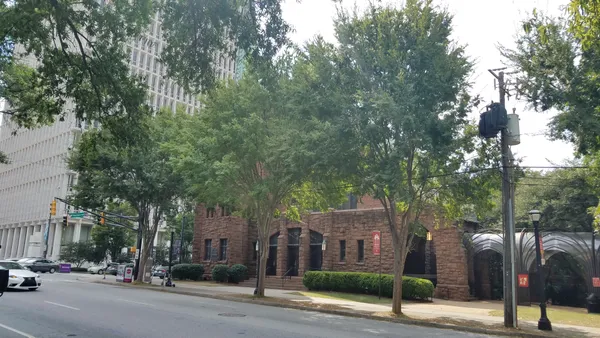
State preservation group highlights 10 historic sites facing demolition, redevelopment pressure, or costly deterioration
Two well-known metro Atlanta-area properties—Egleston Hall on the Midtown campus of All Saints’ Episcopal Church and Legion Pool at the University of Georgia in Athens—have been named to the 2026 “Places in Peril” list, an annual roundup of Georgia historic resources viewed as most at risk.
The list, now in its 20th edition, identifies ten sites statewide that preservation advocates say face credible threats ranging from demolition and redevelopment to long-term neglect and structural decline. Inclusion is intended to focus public attention on buildings and landscapes considered historically significant, while also encouraging planning and financing strategies that could keep them in use.
Egleston Hall: a century-old Midtown landmark tied to campus planning decisions
Egleston Hall was completed in 1918 and is recognized for its Gothic Revival character, including a prominent stone exterior and a horseshoe-shaped interior plan associated with early 20th-century church educational design. The building has long supported religious and community functions and remains in active use for church-related offices and programming space.
Its future has become part of broader campus planning at All Saints’ Episcopal Church. The church has selected the architecture firm Perkins&Will to work through an initial phase of planning and assessment, with work described by church leadership as a conditions review intended to clarify options and costs. At the same time, preservation advocates have urged that any redevelopment effort prioritize rehabilitation rather than removal, citing the building’s architectural significance and longstanding community role.
In recent communications to members, church leadership has acknowledged both the building’s historic value and reports of significant structural concerns, framing the next steps as an effort to align building decisions with ministry needs, accessibility goals, and long-term stewardship.
Legion Pool: New Deal-era public works site now cleared for demolition
Legion Pool opened in 1936 and was constructed through a Works Progress Administration-era partnership involving civic groups and local government. It has been described in historical accounts as one of the largest swimming pools in the region at the time of its opening and later served as a training site for the U.S. Navy during World War II.
After years of disuse and closure, the university has reaffirmed plans to remove the pool as part of a redevelopment concept that includes parking, green space and an outdoor gathering area. The state’s higher-education governing board has voted to approve the demolition, and a permit has been reported as issued—steps that elevate the project’s immediacy and have made the pool a focal point of campus preservation debate.
Other 2026 “Places in Peril” across Georgia
- Boggs Rural Life Center (Keysville, Burke County)
- Civilian Conservation Corps Camp at Hard Labor Creek State Park (Rutledge, Morgan County)
- McCranie Turpentine Still (Willacoochee, Atkinson County)
- Orange Hall (St. Marys, Camden County)
- Salem Campground (Covington, Newton County)
- Thomas L. Bell Memorial Ballpark (Americus, Sumter County)
- Union Brothers and Sisters Mission Hall (Meridian, McIntosh County)
- Wayne County Courthouse (Jesup, Wayne County)
For property owners and local governments, the list often becomes a public marker of urgency: a signal that long-term stabilization, fundraising, and design decisions may be approaching a point where delay risks permanent loss.
For Atlanta, the listing places renewed attention on how institutions with growing program demands manage aging structures in dense neighborhoods—where land value, construction pressures and maintenance costs can rapidly narrow the range of feasible preservation outcomes.