Atlanta opens protected bike lane on Juniper Street, reshaping Midtown travel from 14th to Ponce
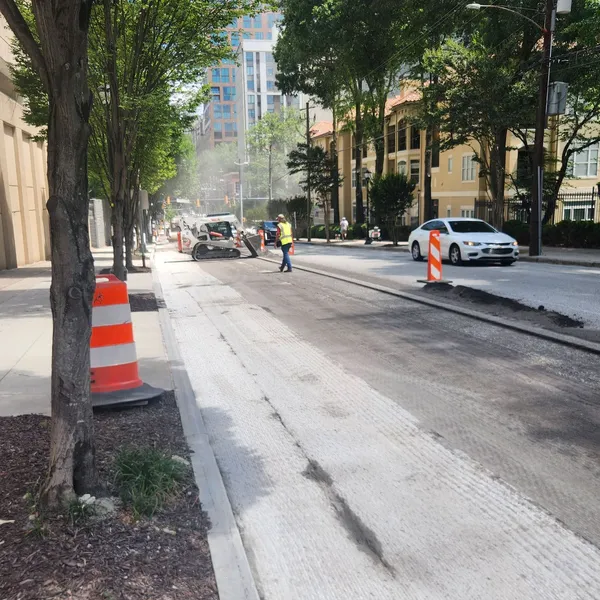
A redesigned corridor through the heart of Midtown
A new protected bike lane is now open on Juniper Street in Midtown Atlanta, marking a major milestone in a long-planned redesign of one of the area’s busiest north–south routes. The southbound facility runs roughly one mile from 14th Street to Ponce de Leon Avenue, a segment that passes major residential towers, offices, retail destinations and connections to MARTA and other multimodal routes.
The Juniper Complete Street Project is a City of Atlanta transportation initiative managed in partnership with Midtown Alliance. Public materials for the project describe a reconfigured street cross-section that reduces general-purpose travel lanes while adding separated space for cyclists and upgraded pedestrian infrastructure.
What changed on Juniper Street
City traffic-advisory documents describing the project identify a package of “complete street” elements installed along the corridor. The work includes resurfacing and restriping the roadway into a two-lane configuration for most blocks, a protected and separated bike lane, widened sidewalks, new street trees and pedestrian-scale LED lighting.
- Protected, separated southbound bike lane designed to physically separate cyclists from motor vehicles.
- Roadway restriped to two general travel lanes for much of the corridor, with turn-lane configurations at key intersections.
- Sidewalk and streetscape upgrades, including trees and pedestrian-scale lighting intended to improve nighttime visibility.
Timeline and cost
Project planning for Juniper’s redesign has been underway for years, with construction spanning roughly 20 months once it began. Local and federal project profiles and public updates describe the corridor limits as Juniper Street from 14th Street to Ponce de Leon Avenue. Recent reporting on the project’s completion put the total cost at more than $8.5 million.
Project updates also show that substantial completion was targeted for late 2025, reflecting schedule adjustments made during the construction period.
How the opening affects drivers, cyclists, and pedestrians
The new configuration is intended to improve safety and predictability for cyclists by keeping riders in a separated space rather than mixing with traffic or relying on painted buffers. For pedestrians, the corridor’s upgraded lighting and streetscape features are designed to support a more walkable environment in a dense commercial and residential district.
For drivers, the redesign changes how roadway space is allocated. Portions of Juniper that previously carried more general-purpose capacity now operate with fewer travel lanes, a shift that can influence congestion patterns and turning behavior, particularly during peak periods. The corridor’s new striping and intersection treatments are aimed at maintaining traffic flow while reducing conflict points between vehicles and people biking or walking.
Juniper Street’s redesign reflects Atlanta’s broader shift toward “complete streets” projects that repurpose roadway space to accommodate multiple modes of travel within the city’s busiest districts.
What’s next
With the bike lane now open, the next test will be day-to-day operations: how well the separation treatments discourage parking or loading conflicts, how smoothly intersections handle turning movements, and whether the corridor’s safety goals are realized as traffic volumes fluctuate across seasons and special events in Midtown.